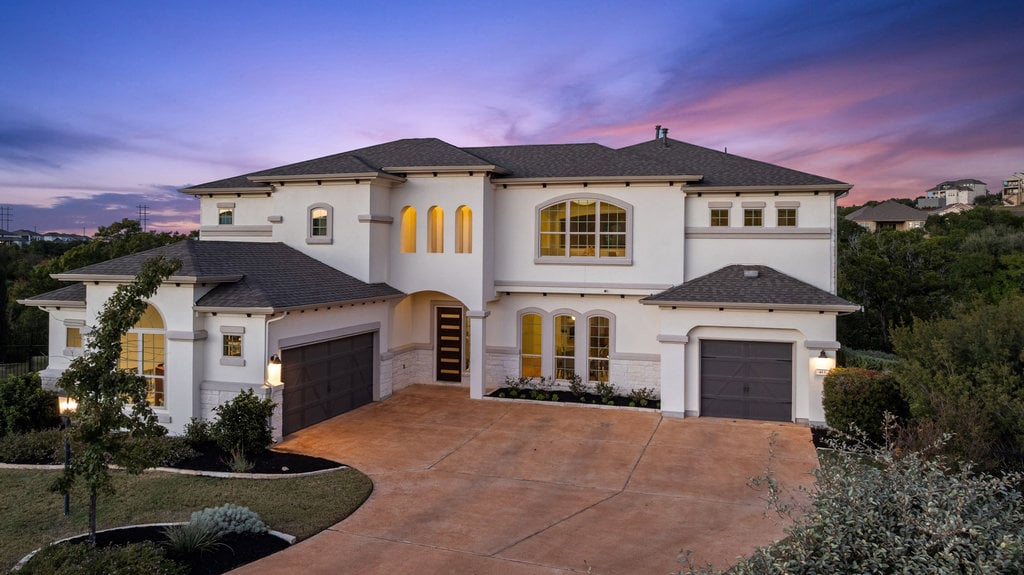
Buying a Home in Austin, Texas
The 2026 guide for families moving to Austin

How do you buy a home in Austin, Texas?
To buy a home in Austin, Texas, get pre-approved with a lender, choose the area and school district that fit your life, then make an offer using the Texas TREC contract, which includes a paid "option period" to inspect the home and walk away for any reason. Most purchases close 30 to 45 days after the offer is accepted. In September 2026, the median home price was $421,000 across the Austin metro and $570,958 inside the City of Austin, with about 5.4 months of inventory, according to Unlock MLS. That's close to a balanced market, which means buyers have more choice and room to negotiate than they did a few years ago.
I'm Cynthia Mattiza, Associate Broker and CLHMS with Kuper Sotheby's International Realty. I've helped families buy and sell homes across Austin for 16 years, from South Austin's 78704 to West Austin, Bee Cave, Westlake Hills and Lake Travis. I raised my young kids in 78704 for over ten years, then moved my family to Bee Cave for the schools and never looked back. I wrote this guide for families moving to Austin from another state who want straight answers before they start.
Key Takeaways for Buying a Home in Austin
- Get pre-approved first. In Austin, sellers expect a lender's pre-approval letter with your offer.
- Pick your school district early. Where you buy decides your school district, your property tax rate and your commute. Austin ISD, Eanes ISD and Lake Travis ISD each have different tax rates and boundaries.
- Understand property taxes. Texas has no state income tax, so property taxes do the heavy lifting. Combined rates around Austin run roughly 1.5% to 2.1% of taxable value, depending on the city and school district.
- File your homestead exemption. It takes the first $140,000 of your home's value off your school district taxes. It doesn't transfer from the seller, so you have to apply yourself.
- Use the option period wisely. It's your window to inspect, get bids and negotiate repairs. After it ends, walking away usually costs you your earnest money.
- Budget for closing costs. Texas buyers typically pay 2% to 5% of the price in closing costs and prepaid items. There is no state transfer tax, and by Texas custom the seller usually pays for your owner's title insurance policy.
- Look past the house. A home's neighborhood, school community and commute will shape your daily life more than its square footage.
Austin Housing Market Quick Facts (2026)
Last updated November 12, 2026. Source: Unlock MLS, September 2026 Central Texas Housing Report.
- Median sale price: $421,000 in the Austin metro (+1.4% vs. 2025), $570,958 in the City of Austin (+4.2%), $497,400 in Travis County (+2.6%)
- Homes sold in September: 2,223 metro, 777 City of Austin, 1,031 Travis County
- Months of inventory: 5.4 metro, 5.4 City of Austin, 5.8 Travis County
- Average sale-to-list ratio: 92.7% metro, 92.5% City of Austin, 92.5% Travis County
- Active listings: 13,465 metro, 4,502 City of Austin, 6,360 Travis County
- Median rent: $2,100 metro, $2,195 City of Austin, $2,175 Travis County
What this means for buyers moving to Austin: about 5 to 6 months of inventory is close to a balanced market, so you have time to compare homes and room to negotiate. Homes are selling for about 92% to 93% of their final list price on average. Well-priced homes in top school districts still move fast, especially in spring, so it pays to be ready before you find the one.
Prices vary a lot by area. A home in Round Rock, Leander or Pflugerville often costs far less than a similar home in Westlake Hills, Bee Cave or Central Austin. For neighborhood-level numbers, see my Lake Pointe guide, my Uplands guide and my Bee Cave golf course communities guide.
The Steps to Buying a Home in Austin
Buying in Texas follows the same basic path as most states, but a few Texas-specific rules catch out-of-state buyers off guard. Here's the process from start to keys.
1. Get pre-approved and set your real budget. Talk to a lender before you tour homes. A pre-approval letter tells you what you can borrow and shows sellers you're serious. Build your budget around the full monthly cost, not just the mortgage: principal, interest, property taxes, homeowners insurance and any HOA dues. In Austin, property taxes can be one of the biggest line items, so ask your lender to estimate them using the tax rate for the exact area you're considering.
2. Choose your area and school district. This is the decision that shapes everything else. Your address decides your school district, your property tax rate, your commute and the community your kids grow up in. Many families moving to Austin focus on the west side for top-rated public schools in Eanes ISD (Westlake, West Lake Hills, Rollingwood) and Lake Travis ISD (Bee Cave, Lakeway, Spanish Oaks). Read my Eanes ISD vs. Lake Travis ISD guide for a side-by-side comparison, including private school options.
3. Hire a local agent who knows the neighborhoods. Austin is a big, spread-out market, and conditions change from one neighborhood to the next. A local agent should know school boundaries, which streets back to a busy road, which communities have MUD taxes, and what homes really sold for, not just what they were listed at. If you're relocating, ask how they'll show you homes when you can only fly in for a weekend.
4. Tour homes and narrow your list. Set up a search in the areas you like and tour in person or by video. Pay attention to the street, the lot and the neighbors, not just the finishes. My background in interior design and custom home building helps buyers see which updates are cosmetic and which are expensive, before you fall in love with a house.
5. Make an offer using the Texas TREC contract. Most Texas resale homes are bought with the One to Four Family Residential Contract (Resale) created by the Texas Real Estate Commission. Your offer will spell out:
- Sales price and financing. If you're using a loan, the Third Party Financing Addendum gives you a set number of days to get final loan approval.
- Earnest money. A good-faith deposit held by the title company. It's credited to you at closing.
- Option fee and option period. You pay the seller an option fee for the unrestricted right to terminate the contract for any reason within a set number of days. If you terminate in time, you lose only the option fee, and your earnest money comes back. If you close, the option fee is credited toward your purchase.
- Closing date, title and survey terms, and any items the seller agrees to leave or repair.
6. Inspect the home during the option period. Schedule your inspection right away, since the option period is usually short. In the Austin area, pay close attention to foundation movement (our clay soils shift), the roof, the age of the air conditioning, drainage, and whether the home is on septic or city sewer. If a home is in or near a floodplain, check the flood zone and get insurance quotes before your option period ends.
7. Negotiate repairs or a credit. After the inspection, you can ask the seller to make repairs, lower the price, or give you a credit at closing. Focus on safety issues and big-ticket items like foundation, roof, plumbing and HVAC. Small cosmetic items rarely move the needle, and asking for too much can cost you goodwill with the seller.
8. Finish your loan, appraisal, title and insurance. Your lender will order an appraisal and finalize your loan. The title company will review the title commitment, and you'll get a survey or the seller's existing survey. Line up your homeowners insurance early, since some insurers ask about the roof's age or require an inspection.
9. Final walk-through and closing. Walk the home a day or two before closing to confirm it's in the agreed condition and any promised repairs are done. In Texas, you close at a title company, which handles the paperwork and funds. Bring a valid photo ID, and wire your funds only after confirming the instructions by phone with your title officer, since wire fraud is common. Once the deed records and funds are sent, you get the keys.